Small scale gardening and the art of local technology
In a world obsessed with global logistics and frictionless convenience, we have collectively misplaced our sense of agency.
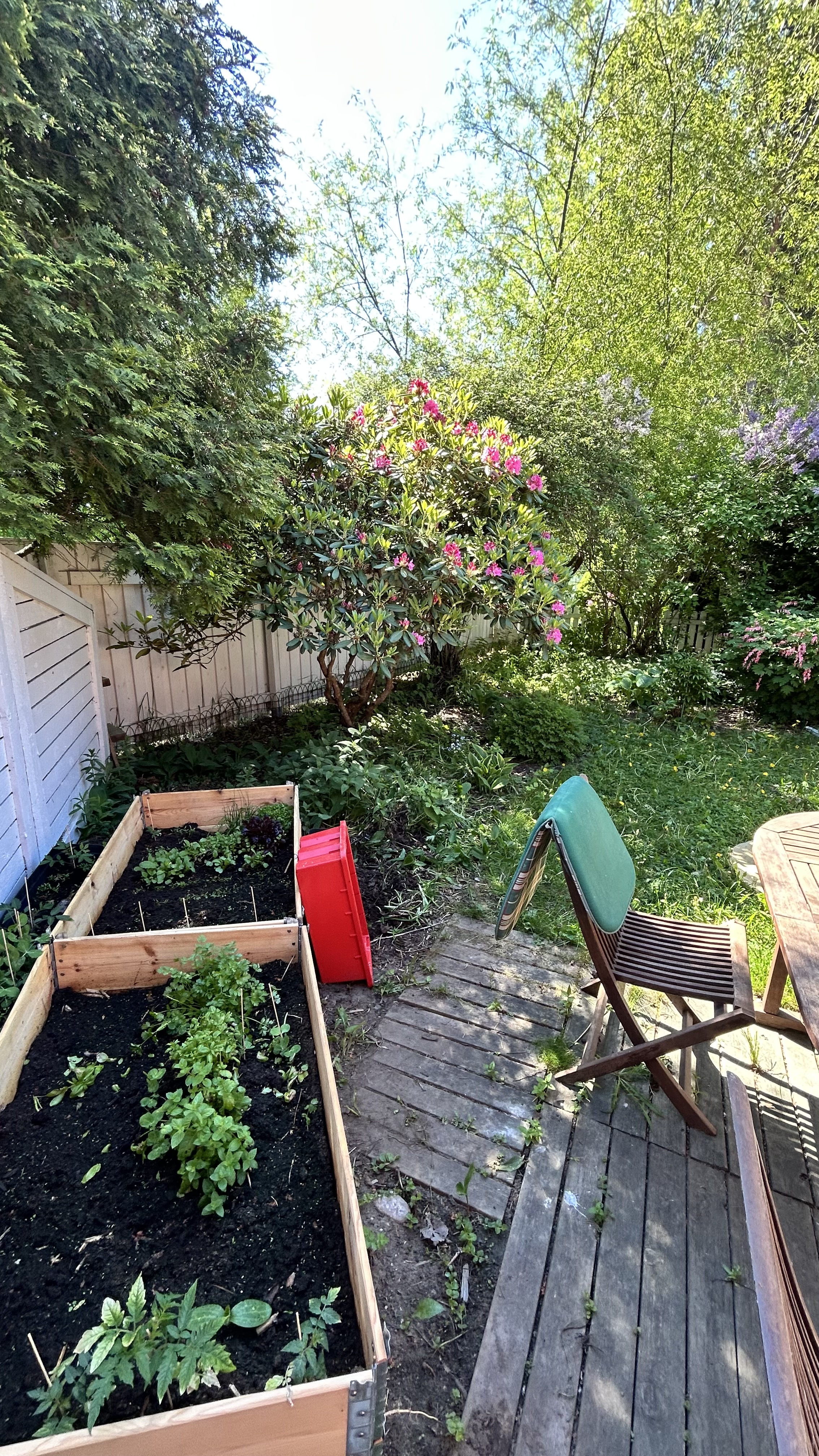
We have traded the messy, grounding work of the artisan for the sterile output of global platforms. Whether it is a small vegetable patch or a custom-built software stack, the principle is the same: self-reliance is not just practical. It is, I think, a quiet act of defiance.
The logic of the garden
Small-scale gardening is not intended to stock shelves on the other side of the world. Its purpose is local and intimate, meant first and foremost for yourself and the people closest to you. There is an inherent humility in the soil, a direct feedback loop between effort and harvest that no industrial operation can replicate.
When you grow your own food, even partially, something shifts. You build knowledge that is yours, grounded in the specific conditions of your specific patch of ground. You stop being a passive receiver of someone else's supply chain decisions and start having at least some understanding of what it actually takes to feed yourself. That is not a small thing, even if the vegetable patch is.
The skills compound quietly. The infrastructure, modest as it is, belongs to you.
The digital equivalent
Apply the same logic to technology, and the current state of things starts to look rather fragile.
We are caught between two uncomfortable realities. On one side, the walled gardens of legacy big tech, convenient and deeply sticky, designed at every level to ensure you never quite feel the need to leave. On the other, a flood of AI-assisted building that produces things which look functional until they are not, systems that nobody fully understands, maintained by nobody in particular, dependent on services that may or may not exist in three years.
This is part of why genuine open-source solutions matter, and why the broader European push toward technological sovereignty is worth taking seriously, even when the execution is frustrating. They represent something beyond the product itself: a conscious choice to own the infrastructure you depend on rather than renting it indefinitely from landlords whose interests are not yours.
A community-tended garden, to stretch the metaphor perhaps one step too far.
Why building your own still matters
There is a prevailing assumption that because a platform is cheap or free or good enough, the alternative is not worth the effort. I am not sure that holds.
When you build something yourself, with real intent and real understanding, you know how it breaks. More importantly, you know how to fix it. That knowledge does not transfer when you outsource the thinking to a model that produces plausible-looking output without any underlying comprehension of what the system actually needs to do.
There is also something subtler at stake. The tools we use shape how we think about problems. If everyone is working inside the same platforms, nudged by the same defaults, constrained by the same assumptions baked into someone else's product decisions, the range of solutions we collectively arrive at narrows in ways that are hard to notice from inside. You do not see the paths you stopped considering.
Building your own stack, even partially, even imperfectly, keeps those paths open. It is slower. It is messier. It requires sitting with uncertainty and incomplete understanding in a way that reaching for the convenient option does not. But that friction is not a bug. It is, I think, closer to the point.
Self-reliance has never really been about survival. It is about remaining a capable, thinking agent in systems increasingly designed to make that unnecessary.